
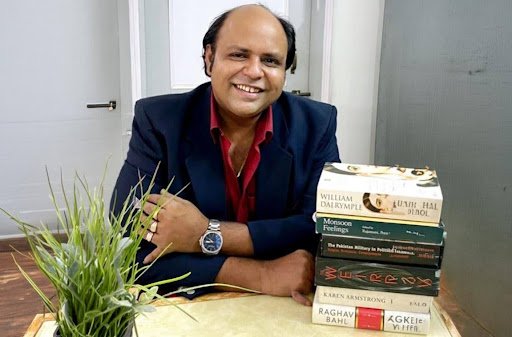

Medicine and literature are often seen as two very different fields. One helps heal the body, while the other helps us understand people, cultures, and history. For Dr. Shadab Ahmed, both have shaped his life in meaningful ways.
A Head and Neck Plastic and Reconstructive Surgeon by profession, Dr. Ahmed spends his days caring for patients. Away from his medical work, he devotes much of his time to reading, studying, translating, and writing poetry from different parts of the world.
While many know him as a doctor, his first love was literature.
When a Father’s Doubt Changed Everything
Dr. Ahmed often says that he became a poet before he became a doctor. His interest in poetry began during his teenage years when he developed a deep love for literature from different countries and cultures.
A challenge from his father played an important role in shaping his path. When his father told him that he would never be able to turn simple lines into meaningful poetry, Dr. Ahmed accepted the challenge. What began as a personal test slowly grew into a lifelong passion.
Over the years, poetry became far more than a hobby. It became a way for him to understand history, culture, and human emotions across different societies and generations.
When Translation Becomes Cultural Preservation
Dr. Ahmed’s work goes beyond writing original poetry. He has spent years studying literary traditions from Persia, India, Spain, Portugal, Turkey, China, Europe, and many other regions.
Many of these works were written centuries ago and remain inaccessible to modern readers because of language barriers. Through translation and interpretation, Dr. Ahmed helps bring these voices to English-speaking audiences.
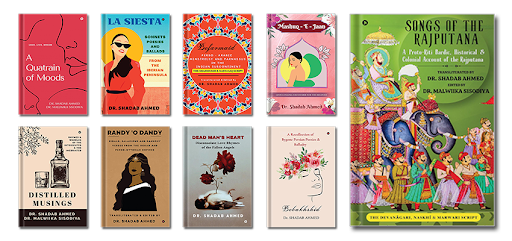
His books such as Bebakhshid, Befarmaid, La Siesta, and Distilled Musings introduce readers to poets, writers, and literary traditions that have shaped entire cultures.
For him, translation is not simply about changing words from one language to another. It is about carrying stories, ideas, beliefs, and cultural memory from one generation to the next.
Literature as a Record of Civilizations
Dr. Ahmed believes that every poem carries a piece of history.
Behind every verse lies a society, a language, a way of life, and a record of how people viewed the world around them. When old literary works disappear, parts of that history can disappear with them.
This belief is reflected in his latest book, Songs of the Rajputana. The book draws from bardic traditions, historical records, military accounts, and colonial-era sources to present the story of the Rajputs across different periods of Indian history.
The work reflects his long-standing interest in both literature and historical study.
Why Cultural Preservation Matters
In a time when reading habits are changing and many classical languages are becoming less common, literary preservation has become increasingly important.
Dr. Ahmed believes that old poems and texts still carry valuable lessons about human life. The emotions found in them—love, hope, faith, grief, courage, and longing—remain familiar even centuries later.
His work is driven by a simple idea: important voices from the past should not be forgotten.
Through his books, translations, and research, Dr. Shadab Ahmed helps keep literary traditions alive, allowing readers to engage with cultures, histories, and ideas that might otherwise fade from memory.
In doing so, he is preserving far more than poetry. He is helping preserve the stories and cultural legacy of civilizations across the world.
