

Artificial intelligence is changing what people can do at work. It can draft, summarize, brainstorm, automate tasks, and help professionals work faster. But as AI becomes more capable, an equally important question is emerging: what will people still need to do exceptionally well?
Over the coming decade, the answer may increasingly lie in what I prefer to call durable skills which is the human capabilities that remain valuable even as technologies and job roles change. Communication, empathy, judgment, adaptability, self-awareness, leadership, and the ability to navigate conflict are becoming increasingly important alongside technological literacy. The World Economic Forum’s Future of Jobs Report 2025 similarly points toward the continuing importance of human-centered capabilities such as leadership, resilience, flexibility, empathy, and active listening as workplaces transform.
My interest in these skills comes from my background in psychology. Before entering business education and studying artificial intelligence, I was trained to think about how people understand emotions, regulate their responses, communicate under pressure, and understand perspectives different from their own. As conversations around AI increasingly focused on what technology could do faster or better, I became interested in a different question: Are we giving people enough opportunities to practice the human side of work?
We teach people what empathy means. We discuss communication, self-awareness, emotional regulation, and conflict management. Yet understanding these concepts is very different from applying them when a colleague is frustrated, a manager gives unexpected criticism, a team is in conflict, or an important conversation does not go as planned. I began to see that the gap was often not information. The gap was practice.
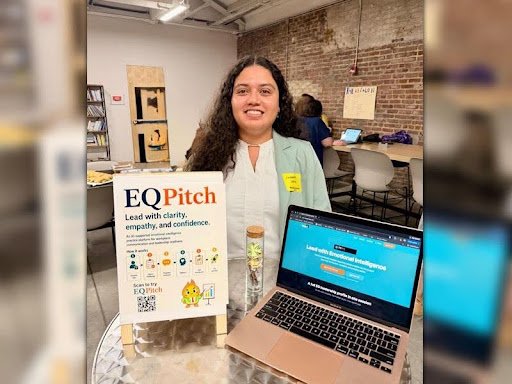
That thought became the foundation of EQPitch, an AI-supported emotional intelligence practice platform designed to make these skills more experiential. Instead of only reading about emotional intelligence, users work through realistic workplace situations, decide how they would respond, reflect on their choices, receive skill-based insights, and complete practical activities. The platform focuses on areas including self-awareness, self-regulation, social awareness, empathy, confidence, feedback, conflict, and communication under pressure. The idea is not to label someone as emotionally intelligent or unintelligent, but to provide a safe environment where people can recognize patterns, reflect, and practice responding differently.
EQPitch itself has grown through the same process of practice and reflection. Its earliest version began with 15 scenarios. Feedback from users helped me understand what needed to change: people wanted more situations, clearer insights, opportunities for reflection, and activities that could help translate feedback into action. The platform subsequently expanded to 50 scenarios with post-scenario insights, reflection prompts, skill-based results, and practical activities. Among early users who provided feedback, 90 percent described the scenarios as realistic and 80 percent indicated that they would use the platform again.
A significant part of this development happened through Unlock Alabama, an eight-week entrepreneurial program that gave me a platform to take the idea beyond something I was thinking about and actively build, test, receive feedback, and present it. Being surrounded by mentors and other builders encouraged me to continuously question the idea: Who is this really helping? What problem am I solving? What should I change after people actually use it? By the end of the experience, I was not simply explaining EQPitch as an idea; I was demonstrating something people could experience for themselves.
That journey reinforced the principle behind EQPitch itself: development requires practice. We would never expect someone to become a confident public speaker simply by reading about public speaking. Human skills deserve the same opportunity to be practiced.
AI will undoubtedly remain part of the future workforce. The challenge is not choosing between technological skills and human skills. It is developing both. As AI becomes more capable of helping us produce the work, durable skills may increasingly determine how well we work with, understand, and lead one another.
