
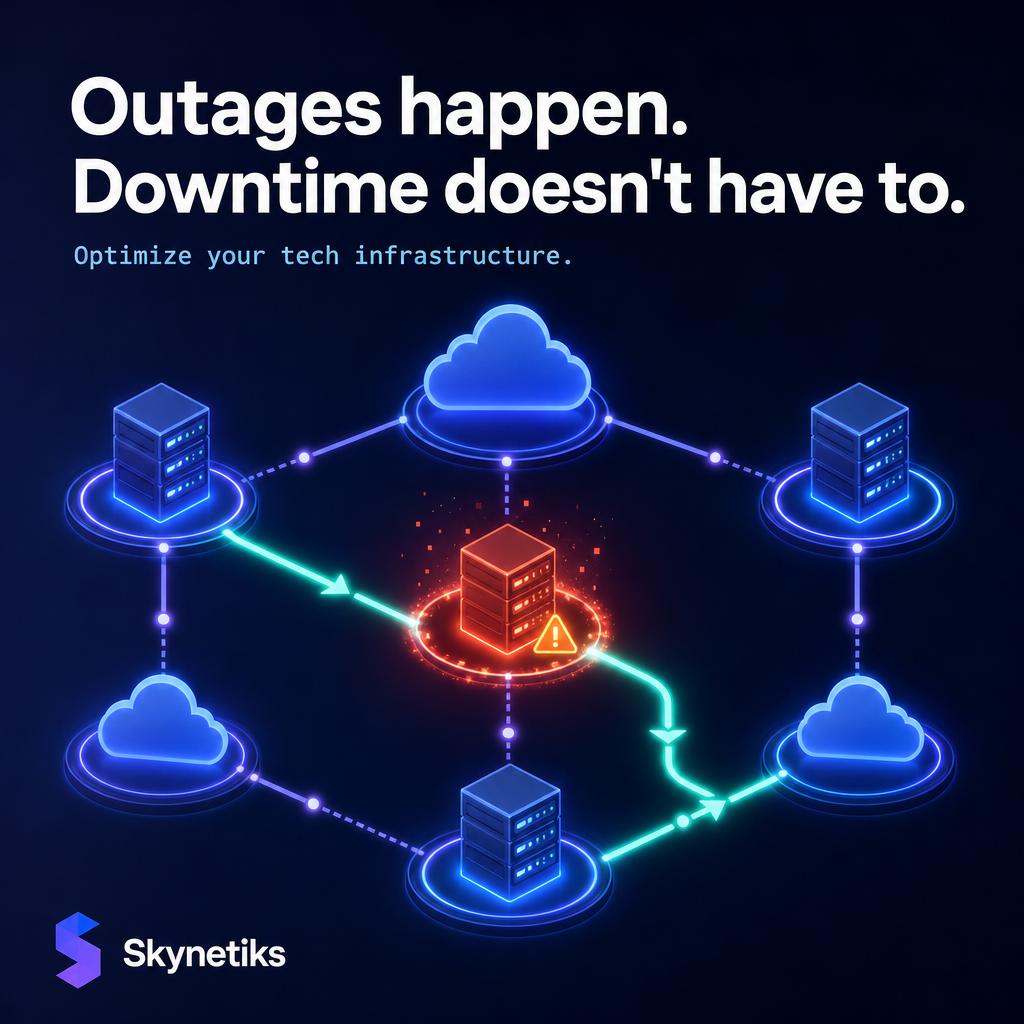

From Microsoft 365 to major US banks and Apple, a run of high-profile failures is pushing resilience up the boardroom agenda.
It was a rough week for the systems the modern workplace takes for granted.
On November 12, Microsoft 365 services, including Outlook, Teams and Copilot, were interrupted, with Downdetector receiving outage reports from users in more than 70 countries and territories. The disruption affected governments, courts, healthcare services, businesses, airlines and banks in many places. Based on published timestamps, the outage lasted nearly a full day. Microsoft’s preliminary report points to a latent defect from July in a fix for networking gateway servers, compounded by a traffic surge and reduced gateway capacity. The final report is expected shortly.
The following days brought more. On November 16, customers of JPMorgan Chase, Bank of America and Wells Fargo reported trouble logging in and moving money, including through Zelle, and JPMorgan blamed a software bug for transaction delays. On November 17, Apple said an internal update caused a widespread outage affecting iCloud, AppleCare, the App Store and business and school tools. The disruption lasted several hours.
Unrelated failures, one shared lesson
Officials and analysts have stressed that these incidents are not linked, and the companies that gave causes cited ordinary technical faults such as software defects, network upgrades and internal updates. Microsoft was explicit that its outage was not caused by a cyberattack or by AI agents.
But the backdrop matters. The systems underneath our daily work are getting more complex and more heavily loaded, and AI is a large part of that load. Forrester’s 2026 cloud predictions warn that AI data center upgrades will trigger at least two major multiday cloud outages this year. Ookla found that days of unusually high outage reports across four major AI apps rose from six in Q1 2025 to 51 in Q1 2026, with failure points spanning GPU fleets, developer APIs and login systems. More demand and more moving parts mean more places for a single defect to cascade.
Why optimization is now a business-continuity issue
For most organizations, a vendor’s outage is outside their control. How much it hurts is not. Businesses that weather these events best tend to share a few habits:
Know your dependencies. Email, calendars, chat, file storage, payroll and CRM often sit on different platforms. Mapping which failure stops which workflow is the first step to planning around it.
Configure for resilience, not just function. Admin settings, access policies, backup and retention, and sensible failover paths decide whether a bad day is an inconvenience or a shutdown.
Don’t rely on one tool for everything. A communication fallback, such as a secondary channel for staff and customers, is cheap insurance.
Keep licences, security and data hygiene in order. Over-provisioned, poorly governed environments are harder to monitor and slower to recover.
Rehearse. An outage plan nobody has tested is a hope, not a plan.
Where specialist partners fit
Most IT teams are stretched thin, and cloud platforms change constantly. That is why many organizations bring in certified partners who work with these platforms every day. Skynetiks Technologies is one such firm, a premier partner of Google, Microsoft and Zoho, with deep expertise in Google Workspace, Microsoft 365 and the full Zoho suite. Its work centres on setting up, migrating and tuning these environments so that the business keeps running when something upstream goes wrong. More about the company is at Skynetiks Technologies.
The takeaway
The platforms will keep evolving, and so will the ways they fail. The organizations that come out ahead will be the ones that treated their technology foundation as something to review and improve continuously, before the next outage forced the question.