
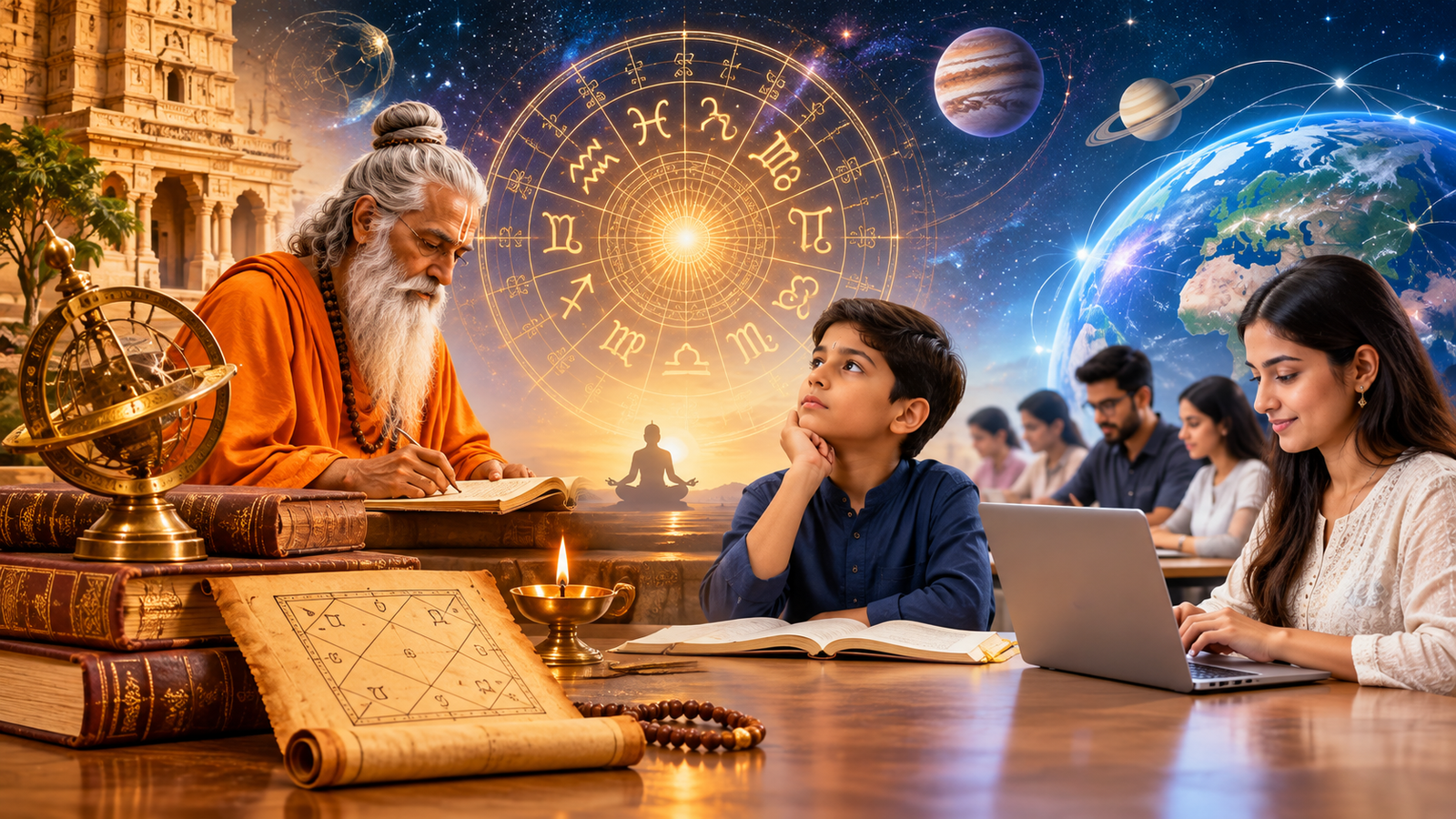

As global interest in India’s ancient knowledge traditions grows, the need for structured education, authentic learning and professionally trained Jyotish practitioners is becoming increasingly important.
In an increasingly complex and fast-changing world, the search for purpose, direction and a deeper understanding of life continues to transcend geographical, cultural and social boundaries. Despite remarkable advancements in science and technology, individuals across the world remain interested in understanding human behaviour, relationships, life experiences, destiny and the larger forces that shape existence.
It is in this context that India’s ancient knowledge traditions are finding renewed relevance. Among them, Jyotish Shastra, one of the six Vedangas, offers a profound framework for understanding cosmic patterns, planetary movements, time cycles and the relationship between human experiences and the larger cosmic order.
However, while interest in Vedic Astrology continues to attract learners from diverse backgrounds, an important question emerges: Is the quality and structure of Jyotish education evolving at the same pace as its growing popularity?
Beyond Predictions: Rediscovering the Relevance of Jyotish
Jyotish is often popularly understood as a means of predicting future events. However, its scope extends considerably beyond predictive astrology.
Rooted in the philosophical foundations of Vedic knowledge, Jyotish provides a framework for studying Karma Siddhanta, understanding life’s patterns, exploring individual tendencies and recognising one’s Swadharma.
Its study involves multiple dimensions, including astronomy, mathematics, planetary relationships, time cycles, human experiences and philosophical inquiry.
When approached with depth and responsibility, Jyotish can become a meaningful instrument for self-understanding, awareness and guidance.
Its relevance today lies not only in preserving an ancient tradition but also in making its principles accessible to contemporary society through authentic education and responsible application.
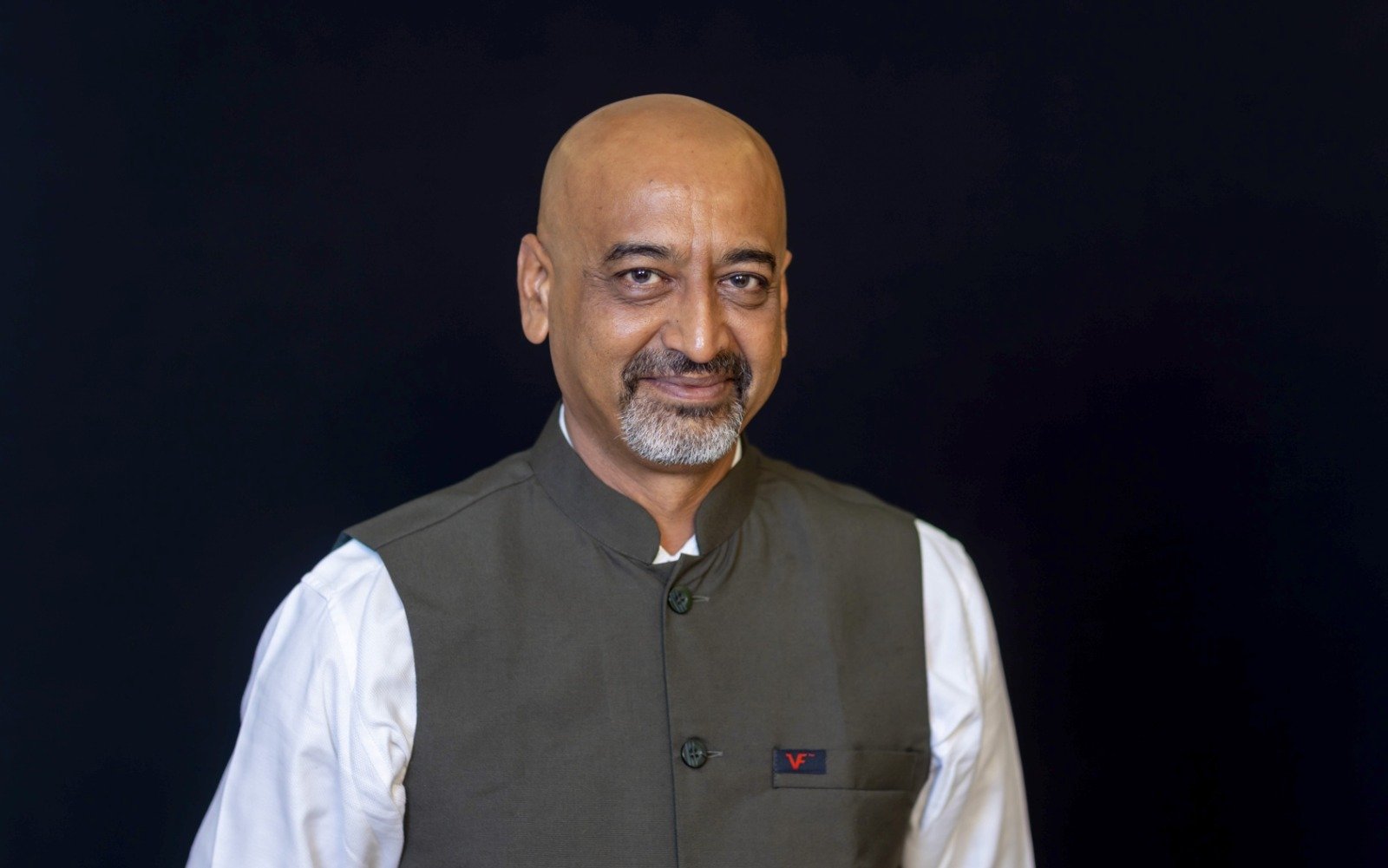
“Jyotish cannot be mastered through shortcuts or memorisation. It requires a systematic study of Shastric principles, conceptual clarity, practical application through real-life case studies, and continuous guidance from experienced mentors. True learning lies in understanding the science, practising it with discipline and applying its wisdom with empathy and responsibility.”
– Shri Manish Bhayani
Co-founder & Jyotish Acharya
Aryaman Gurukul of Vedic Studies LLP
The Emerging Need for Quality Jyotish Education
As more individuals explore Vedic Astrology, there is a growing need to move beyond fragmented learning, isolated techniques and the mere memorisation of astrological rules.
The development of competent Jyotish practitioners requires much more than familiarity with planetary combinations or predictive formulas.
It calls for a comprehensive understanding of classical principles, a systematic progression of learning, analytical thinking, practical interpretation and the ability to apply knowledge to diverse real-life situations.
Quality Jyotish education must therefore focus on:
– Authentic Knowledge: A strong grounding in classical Jyotish principles and Shastric foundations.
– Structured Learning: Progressive educational pathways that take learners from fundamental concepts to advanced techniques and specialisations.
– Conceptual Clarity: Understanding the underlying principles rather than simply memorising rules.
– Practical Application: Extensive exposure to horoscope interpretation, real-life case studies and analytical exercises.
– Research Orientation: Encouraging investigation, documentation and deeper exploration of classical knowledge.
– Professional Competency: Developing the skills required for responsible interpretation and professional consultations.
– Ethical Practice: Emphasising empathy, integrity, confidentiality and sensitivity while guiding individuals.
There is also an opportunity to introduce more contemporary educational methodologies without compromising the traditional integrity and philosophical depth of Jyotish.
From Traditional Learning to a Structured Educational Ecosystem
Historically, Jyotish knowledge has largely been transmitted through traditional teacher-student relationships and individual learning experiences. While this approach has preserved invaluable knowledge across generations, the growing interest in Jyotish calls for complementary educational models that can make authentic learning more accessible, systematic and scalable.
Structured curricula, progressive learning levels, assessments, practical exercises, mentorship and research opportunities can help bridge this gap.
A combination of traditional knowledge and modern digital learning methodologies can also make quality Jyotish education accessible to learners across different age groups, professional backgrounds and geographical locations.
Recognising this emerging need, institutions such as ARYAMAN Gurukul of Vedic Astrology, an initiative of Aryaman Gurukul of Vedic Studies LLP, are working towards creating a more comprehensive and structured learning ecosystem.
An Integrated Approach to Learning Jyotish
The educational framework at ARYAMAN Gurukul is designed to take students through a progressive journey, from foundational understanding to advanced learning and specialised applications.
Its programmes cover the philosophical foundations of Jyotish, Karma Siddhanta, Navagrahas, Rasis, Bhavas, Nakshatras, divisional charts, Dasha systems, Jaimini Jyotish, Ashtakavarga, Gochara, Prashna and other specialised branches.
The learning methodology combines structured pre-recorded video lessons with interactive live sessions, offering the flexibility of self-paced learning alongside opportunities for mentor interaction, doubt clarification and collaborative discussions.
Importantly, the emphasis extends beyond theoretical instruction. Assignments, assessments, horoscope studies, real-life case discussions and practical interpretation exercises help students progressively develop analytical and application-oriented skills.
Internship initiatives, research projects and collaborative learning opportunities further encourage students to explore the practical dimensions of Jyotish, develop research capabilities and gain exposure to its professional applications.
The Gurukul also places importance on continuous mentorship and peer learning, creating a community where students can exchange perspectives, discuss interpretations and deepen their understanding through collective knowledge-sharing.
Making Jyotish a Meaningful Professional Career
Perhaps one of the most significant opportunities emerging in this field is the recognition of Vedic Astrology as a structured professional vocation.
For Jyotish to gain wider acceptance and professional credibility, it needs practitioners who possess not only sound technical knowledge but also the ability to analyse, interpret and communicate responsibly.
This requires a shift from informal learning towards comprehensive competency development, practical exposure, professional ethics and continuous learning.
A well-trained Jyotish practitioner must combine Shastric understanding with analytical ability, interpretative skills, empathy and emotional maturity.
The opportunity is to create meaningful career pathways for individuals who wish to pursue Jyotish as a profession, develop independent consulting practices, specialise in different branches of astrology or contribute to teaching, research and knowledge propagation.
This is particularly relevant for younger generations and working professionals seeking to explore Jyotish not merely as a personal interest but as a serious field of study and a potential career.

“An emerging generation of seekers is looking beyond conventional career paths for meaningful learning that offers both personal growth and professional opportunities. Quality education in Jyotish can fulfil this aspiration by combining self-discovery with the development of specialised knowledge and practical skills. Our endeavour is to make this ancient Vidya accessible through structured learning and open new pathways for those who wish to pursue it as a meaningful profession.”
– Smt. Shriya Pai
Co-founder & Chief Administrator
Aryaman Gurukul of Vedic Studies LLP
Taking the Wisdom of Bharat to the World
The growing international interest in India’s knowledge traditions presents an important opportunity to take authentic Vedic education beyond geographical and cultural boundaries.
Digital learning platforms, multilingual programmes, international student communities and collaborative research initiatives can help make Jyotish accessible to a much wider audience.
The larger responsibility is to ensure that as this knowledge reaches new audiences, its authenticity, philosophical foundations and ethical application remain intact.
The future of Jyotish will depend not merely on how widely it is learnt, but on how deeply it is understood, how responsibly it is practised and how meaningfully it contributes to society.
Institutions committed to quality education, practical learning, research and professional development have an important role to play in this evolution.
Ultimately, Jyotish is much more than the art of predicting events. It is a journey of understanding life, recognising Karma, discovering one’s Swadharma and developing a deeper awareness of the self.
The need of the hour is to preserve this timeless Vidya while creating the educational foundations, professional standards and global learning opportunities that will enable it to flourish for generations to come.
Ancient wisdom deserves contemporary relevance. And contemporary relevance demands quality education.