
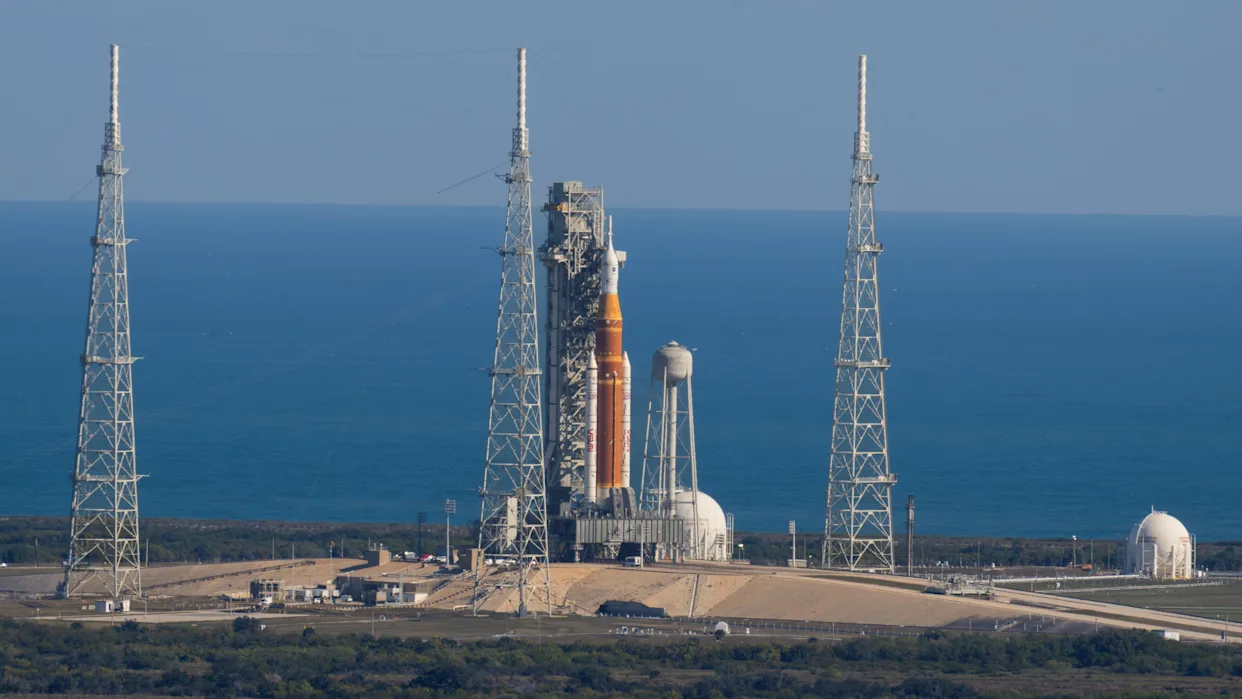

The road back to the Moon has proven longer and more complex than expected. In the latest twist for America’s deep-space ambitions, NASA has once again postponed its astronaut moon mission following a newly discovered rocket issue. The announcement marks another delay for Artemis II, the highly anticipated mission designed to send astronauts around the Moon for the first time in more than 50 years.
With this new setback, April is now the earliest window when the four-member crew of Artemis II might make their historic journey.
A Fresh Problem Emerges
Just a day after NASA had set its sights on a March 6 launch date, engineers identified a new complication involving the rocket’s helium system. During routine testing, the flow of helium to the rocket’s upper stage was unexpectedly interrupted overnight.
Helium plays a critical role in rocket operations. It is used to purge engines and pressurize fuel tanks—processes essential to ensuring the vehicle performs safely and efficiently. Without a stable helium flow, the rocket cannot meet the stringent safety standards required for human spaceflight.
Importantly, this new helium concern is unrelated to the hydrogen fuel leaks that disrupted an earlier dress rehearsal of the powerful Space Launch System rocket. That earlier issue had already pushed the mission timeline back by a month.
What Went Wrong?
According to NASA Administrator Jared Isaacman, the helium interruption could be traced to a faulty filter, valve, or connection plate. While engineers are still investigating the precise cause, one thing is clear: the issue cannot be resolved easily at the launch pad.
To access and repair the affected section, the towering 322-foot rocket must be rolled back to its hangar inside the Vehicle Assembly Building at Kennedy Space Center.
Isaacman acknowledged public disappointment but emphasized the team’s commitment to safety. “We will begin preparations for rollback, and this will take the March launch window out of consideration,” he shared publicly. The next possible opportunities are now projected for early or late April.
Why Rollback Is Necessary
Earlier in the day, NASA had considered whether repairs could be completed directly at the launch pad. However, spokeswoman Cheryl Warner explained that the situation remained fluid and evolving. Ultimately, the preparations required for rollback alone eliminate any realistic chance of a March launch.
Rolling back such a massive rocket is no small task. The process involves carefully transporting the vehicle back to the assembly building, where engineers have better access, tools, and environmental controls to conduct repairs safely.
Even though a recent fueling test showed minimal hydrogen leaks—boosting confidence for a March liftoff—the helium problem emerged afterward during additional checks. Engineers reportedly worked through the night analyzing the anomaly.
The Role of the Upper Stage
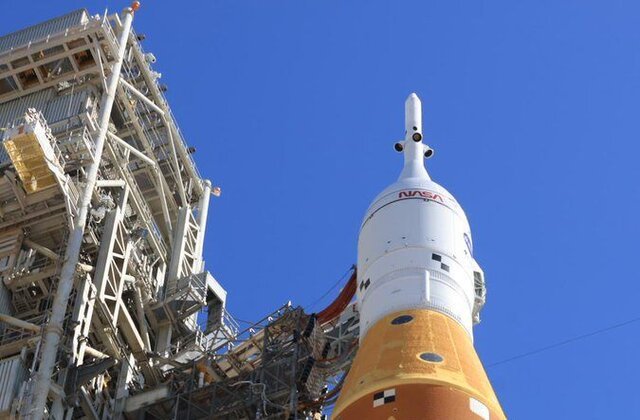
The interrupted helium flow affects the rocket’s interim cryogenic propulsion stage, a crucial upper-stage component. After liftoff, this stage is responsible for placing the Orion crew capsule into a high-altitude Earth orbit.
Once in orbit, the Orion capsule undergoes system checks before continuing toward the Moon. Later, the upper stage separates and serves as a practice docking target for astronauts. This maneuver rehearsal is a vital step in preparing for future missions that aim to land astronauts on the lunar surface.
Any uncertainty in this system demands thorough inspection and correction—especially for a crewed flight.
A Long Journey Back to the Moon
NASA’s return to the Moon falls under the Artemis program, named after Apollo’s mythological twin. During the historic Apollo program, 24 astronauts traveled to lunar orbit between 1968 and 1972. The last human Moon landing took place in 1972.
In contrast, the Artemis program has completed only one mission so far: Artemis I in 2022. That uncrewed test flight successfully orbited the Moon and returned to Earth, but not without its own technical challenges—including hydrogen fuel leaks and a helium issue similar to the one now being addressed.
Artemis II represents the next major milestone. Unlike Artemis I, it will carry astronauts on a lunar flyby mission. However, the first crewed Moon landing under Artemis is still several years away.
Astronauts Remain Ready
Despite the delay, the Artemis II crew remains prepared. The four astronauts had already entered a mandatory two-week quarantine to minimize exposure to illness before launch. While launch dates may shift, astronaut readiness remains a top priority.
NASA officials stress that setbacks are a normal part of complex space exploration efforts. Modern rockets like the Space Launch System are among the most powerful machines ever built, and even small component irregularities can require significant attention.
Safety Above All
The Artemis program represents not just a symbolic return to the Moon but a stepping stone toward eventual missions to Mars. With so much at stake, NASA leadership has made clear that safety cannot be compromised.
Although the delay may disappoint space enthusiasts eager to see astronauts circle the Moon again, engineers believe identifying and resolving issues before liftoff is essential. As history has shown, careful preparation often determines mission success.
For now, teams at Kennedy Space Center will focus on resolving the helium issue and preparing for a potential April launch attempt. The path to the Moon may be challenging, but NASA’s commitment to exploration remains steady.
And while timelines may shift, one thing is certain: the dream of returning humans to lunar orbit is still very much alive.
