

In a ruling that reshapes the balance of economic power in Washington, The Supreme Court overturns Trump’s tariffs, delivering a sharp setback to the president’s hallmark economic strategy. The 6–3 decision marks one of the most consequential legal defeats of former President Donald Trump’s second term and sends shockwaves through U.S. trade policy.
On Friday, the Supreme Court of the United States struck down a major portion of Trump’s far-reaching tariff agenda. At the heart of the ruling was a simple yet powerful conclusion: the law Trump relied upon does not authorize a president to impose sweeping tariffs without clear approval from Congress.
The majority opinion made it clear that such authority would represent a dramatic and unprecedented expansion of executive power. Writing for the Court, Chief Justice John Roberts emphasized that Congress — not the president — holds the constitutional power to tax and regulate tariffs.
Justices Clarence Thomas, Samuel Alito, and Brett Kavanaugh dissented, warning that the immediate aftermath of the decision could create significant disruption.
A Direct Blow to Trump’s Economic Playbook
For Trump, tariffs were more than just policy tools — they were the centerpiece of his economic vision. He frequently portrayed them as leverage against foreign governments, a powerful revenue source, and even a potential replacement for income taxes.
But in this case, the Court found that the statute used to justify the tariffs simply did not grant such expansive powers. The justices noted that no previous president had ever interpreted the law in question to authorize tariffs of such magnitude. To exercise “extraordinary” authority, the majority wrote, the president must point to unmistakable congressional approval — and in this instance, he could not.
The ruling leaves open a critical question: what happens to the billions already collected? Estimates from the Penn Wharton Budget Model suggest that as much as $175 billion may be tied to the invalidated tariff rates. Justice Kavanaugh, in dissent, predicted that sorting out potential refunds could become administratively chaotic.
Betting It All on Emergency Powers
Much of Trump’s tariff strategy hinged on an aggressive interpretation of the International Emergency Economic Powers Act, commonly known as IEEPA.


The IEEPA allows a president to regulate certain foreign economic transactions after declaring a national emergency tied to “unusual and extraordinary” threats. However, the law does not explicitly mention tariffs. Trump’s administration argued that the authority to “regulate importation” implicitly included the power to impose sweeping import duties.
Critics strongly disagreed. They argued that the law was never intended to hand the executive branch unilateral control over global trade policy. Both a federal trade court and a federal appeals court previously ruled that the tariffs exceeded presidential authority, paving the way for Supreme Court review.
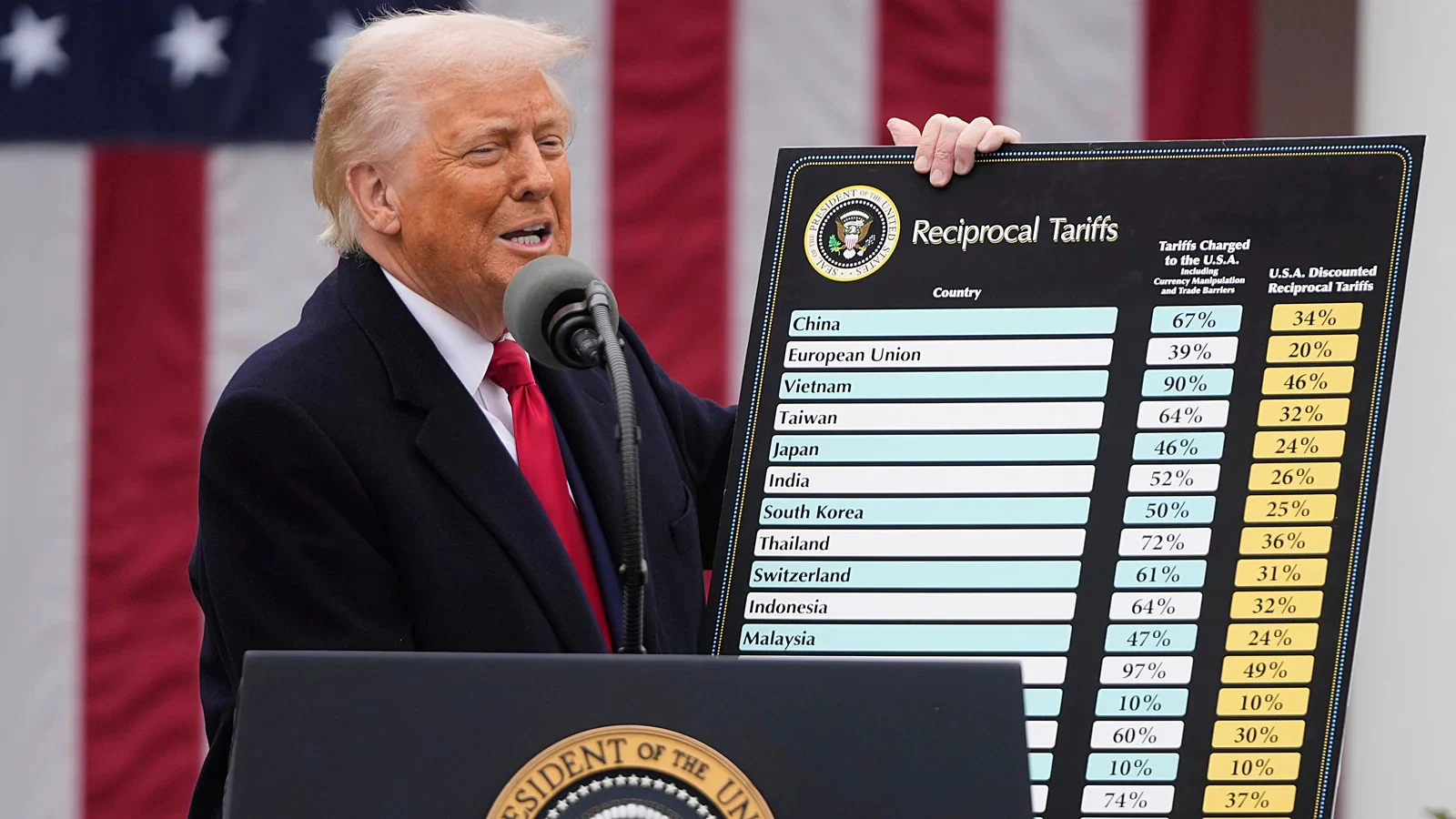
Notably, a significant portion of U.S. tariff revenue last year stemmed from IEEPA-based duties, including Trump’s near-global “reciprocal” tariffs and additional levies linked to allegations of fentanyl trafficking from Mexico, Canada, and China.
Economic and Political Reactions
Reaction to the ruling was immediate and deeply divided.
Democratic lawmakers and trade advocates celebrated the decision as a victory for consumers and constitutional order. Representative Brendan Boyle described the ruling as relief for families burdened by higher prices. Representative Richard Neal echoed that sentiment, calling it a win for the rule of law and America’s standing in the global economy.
Industry groups also expressed approval. The Footwear Distributors and Retailers of America welcomed what it described as a step toward stability in a volatile trade environment. Likewise, the Distilled Spirits Council urged the administration to restore predictable, zero-tariff arrangements with major trading partners, arguing that uncertainty had strained exporters, restaurants, and retailers alike.
International voices weighed in as well. Canada’s trade minister, Dominic LeBlanc, stated that the decision reaffirmed Canada’s long-standing view that the IEEPA-based tariffs were unjustified.
Tariff Turbulence and Market Whiplash
Trump first unveiled his sweeping “reciprocal tariff” plan during a high-profile White House announcement he dubbed “Liberation Day.” The markets reacted swiftly — and negatively — triggering volatility that forced temporary pauses and repeated policy revisions.


Over time, the tariff framework became a complex web of delays, reimpositions, and recalibrations. The administration maintained that the duties were essential tools in trade negotiations and national security strategy. Trump repeatedly argued that foreign nations bore the financial burden of the tariffs — despite acknowledgments from officials that U.S. importers technically pay them.
Revenue figures became a point of contention. Trump claimed the government had taken in over $600 billion from tariffs and suggested that Americans might even receive $2,000 “tariff dividend” checks. However, outside estimates differed. The Bipartisan Policy Center placed 2025 gross tariff revenue closer to $289 billion, while U.S. Customs and Border Protection reported collecting about $200 billion over a defined period. Of that total, approximately $129 billion came from IEEPA-based tariffs.
A Defining Constitutional Moment
Ahead of the ruling, Trump warned of dire consequences if the Court invalidated the tariffs. Treasury Secretary Scott Bessent and other officials had expressed confidence that the judiciary would uphold the president’s signature policy.
Instead, the Court delivered a decisive rebuke. By affirming that tariff authority ultimately rests with Congress, the justices reinforced long-standing constitutional boundaries between the legislative and executive branches.
The broader political implications remain uncertain. Supporters argue the decision restores stability and predictability to U.S. trade policy. Critics fear it limits executive flexibility in responding swiftly to global threats.
What is clear, however, is that The Supreme Court overturns Trump’s tariffs, delivering a sharp setback to the president’s hallmark economic strategy — and in doing so, it reshapes the future of American trade policy for years to come.
