
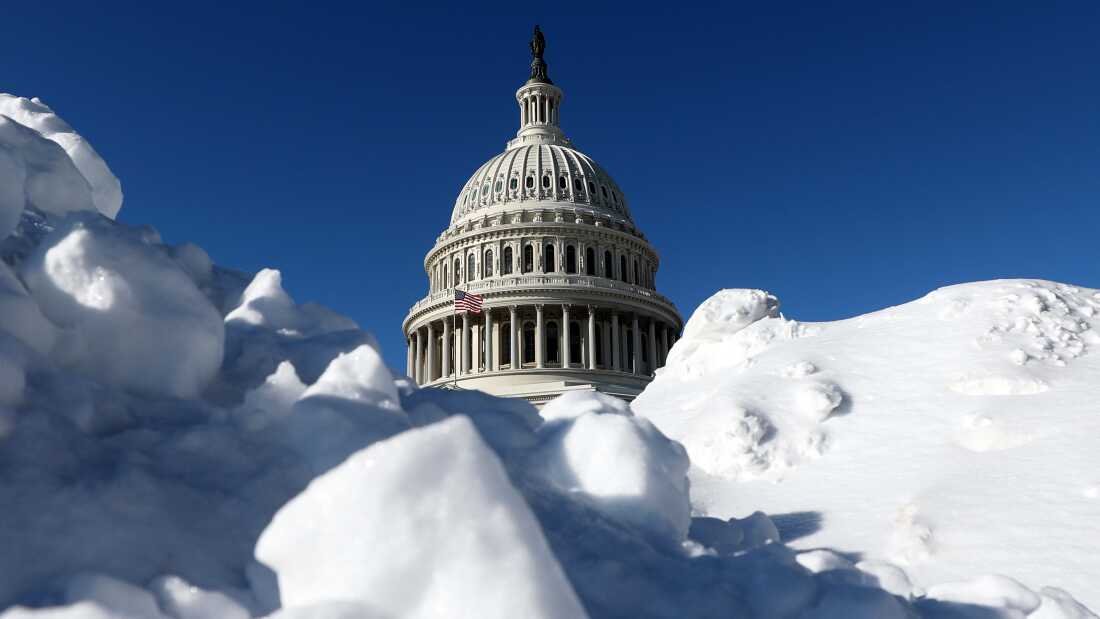

The Partial U.S. government shutdown continues as House vote may restore operations by Monday, after federal funding lapsed early Saturday—despite the Senate clearing a major spending deal just hours earlier.
In a 71–29 vote late Friday, the Senate approved a funding package that included five appropriations bills along with a two-week stopgap measure. The temporary extension is designed to give lawmakers additional time to resolve lingering disputes, particularly around funding for the Department of Homeland Security (DHS).
Why the Shutdown Happened Despite Senate Approval
While the Senate moved the deal forward, the House of Representatives still must approve the final version. With House members not scheduled to return to Washington until Monday, the federal government entered what officials expect to be a short-lived shutdown. The lapse follows last year’s record 43-day shutdown, which disrupted agencies nationwide.
House Speaker Mike Johnson told fellow Republicans during a conference call on Friday that he intends to support the Senate-passed agreement, citing backing from President Donald Trump. Johnson expressed confidence that the House could pass the bill when it reconvenes on Monday, after which it would head to the president’s desk for signature.
Agencies Affected by the Funding Lapse
Funding authority expired for a wide range of federal departments and programs, including:
-
State and Defense
-
Homeland Security
-
Labor and Health and Human Services
-
Transportation and Education
-
Housing and Urban Development
-
Financial Services and related agencies
In a memo circulated Friday, Office of Management and Budget Director Russell Vought instructed federal agency leaders to have employees report to work to begin “orderly shutdown activities.” He noted that the administration is continuing discussions with Congress to finalize appropriations for fiscal year 2026 and expressed hope that the lapse would be brief.
DHS Funding at the Center of the Dispute
Notably, the Senate agreement removed long-term funding for the Department of Homeland Security from the main package. Instead, DHS would receive temporary funding through the short-term stopgap, leaving broader questions about its budget to be addressed later.
DHS has drawn sharp criticism from Democrats over recent immigration enforcement actions, particularly in Minnesota, making it one of the most contentious elements of the negotiations.
Senate Holdouts and Political Tensions
The deal faced delays in the Senate due to objections from a handful of Republican lawmakers. Senator Lindsey Graham of South Carolina placed a hold on the measure earlier Friday, insisting on a guaranteed vote on his proposal to criminalize so-called sanctuary city policies. His plan would impose penalties on state and local officials accused of interfering with federal immigration enforcement.
Graham also sought an amendment related to the “Arctic Frost” investigation, which would require notification to senators if their phone records are obtained during a criminal probe. The House had already included language to repeal a provision allowing senators to sue for damages in such cases—a move Graham publicly criticized.
What Happens Next
President Trump urged lawmakers on Thursday, via Truth Social, to back the agreement that would fund most of the federal government through the end of the fiscal year on September 30. Senate leaders had originally aimed to finalize the deal Thursday night, but Graham’s objections delayed the vote until Friday.
