
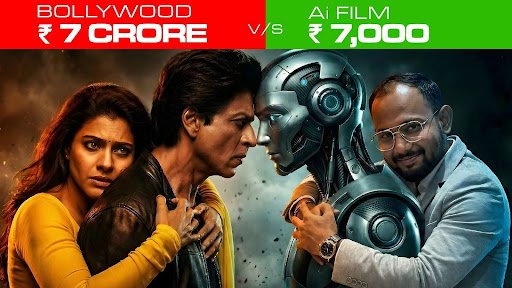

Let’s get one thing straight: Bollywood spent approximately ₹7 crore—that’s ₹70 million, or roughly $850,000 for our international friends keeping score—to film Shah Rukh Khan and Kajol frolicking in Iceland for four minutes of screen time. Meanwhile, Ashwini & Harry Ranveer the Videopreneur, armed with a laptop and the audacity of someone who didn’t get the memo about “how things are done,” recreated a pre-wedding video with Ashwini Ranveer with similar cinematic impact for just ₹7,000 & this video gain virality by attracting over 100,000+ views and 230+ comments.
That’s not a typo. That’s not clickbait. That’s a 1,000x cost difference that should make every film producer in Mumbai choke on their overpriced coffee.
The Emperor’s New Crores
Here’s what nobody wants to admit at those fancy Juhu parties: Bollywood has been running the most elaborate, most expensive theater production of all time, and it’s not happening on screen—it’s happening in the budget spreadsheets.
₹7 crore for one song. Let that marinate. That’s more than most Indian startups raise in Series A funding. That’s enough to build a small hospital. That’s generational wealth for dozens of families. And what did audiences get? Beautiful shots, sure. Iconic moments, absolutely. But also: the kind of bloated production economics that would make a defense contractor blush.
The dirty secret Bollywood doesn’t want you thinking about? You’ve been paying for the inefficiency, not just the artistry.
When Reality Crashes the Party
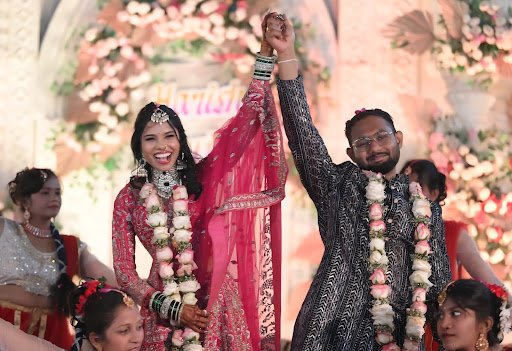
Ashwini & Harry Ranveer didn’t set out to humiliate an industry. He just wanted to test a hypothesis: Could modern AI tools plus actual creative vision replicate what audiences actually remember from blockbuster songs—the emotion, the sweep, the visual poetry—without the circus?
Spoiler alert: Yes. Uncomfortably yes.
His pre-wedding AI film didn’t just work. People described it as “BETTER THAN REAL” and “Unbelievably Realistic.” Not just him, In his masterclass with his 250+ Ai Film Making Students, All are set to create such Ai Films & Disrupt the Traditional methods of FIlm making.
Some viewers didn’t even realize it was AI-generated until told. Which raises a question so obvious it’s painful: What exactly were those extra ₹6,99,93,000 buying?
Let’s Talk About Where Money Actually Goes
You know what costs ₹7 crore? Here’s the real breakdown nobody discusses at IIFA:
Star entourage logistics – Because apparently SRK needs seventeen people to help him look brooding in a leather jacket
Multi-location travel – Flying entire production teams to Iceland when Ladakh exists and looks equally stunning
Choreography teams and endless rehearsals – Because god forbid we nail it in fewer than forty-seven takes
Traditional VFX pipelines with multiple vendor markups – Each one taking their cut like it’s a mob movie
Post-production committees – Where eighteen people need to approve every color grade adjustment
The “this is how we’ve always done it” tax – The most expensive line item of all
Here’s the uncomfortable truth: Most of that money isn’t buying creative excellence. It’s buying risk aversion, ego management, and institutional inertia.
The 10% Question That Breaks Everything
Let’s do some devastatingly simple math. Even if Harry Ranveer’s AI film achieved just 10% of Gerua’s emotional impact—and viewer feedback suggests it’s higher—that’s still ₹70 lakh worth of perceived value created for ₹7,000.
Read that again. Let it hurt.
That’s not a marginal efficiency gain. That’s not “doing more with less.” That’s a complete demolition of everything Bollywood has told us about the “minimum viable budget” for cinematic quality.
And before the apologists start typing angry comments: Yes, we understand stars bring cultural weight. Yes, physical locations have magic. Yes, human performances matter. Nobody’s arguing otherwise.
But none of that explains a 1,000x cost multiplier. None of it.
The Excuse Factory
The predictable defenses are already forming:
“You can’t replace human artistry!” – Nobody said you could. But you can definitely replace the seventeen assistant directors standing around looking important.
“Big productions employ thousands!” – So did handloom weaving before power looms. Economic efficiency is brutal, but it’s reality.
“Stars deserve their fees!” – Sure. But does Shah Rukh’s presence alone justify burning money like it’s a Diwali celebration?
“The original has cultural significance!” – Absolutely. So does the Taj Mahal. Doesn’t mean we need to spend Taj Mahal money every time we want to build something beautiful.
What This Really Means
Here’s what terrifies Bollywood about experiments like Ranveer’s: They expose the markup. They reveal that much of what we’ve been sold as “necessary cost” is actually “comfortable tradition.”
For decades, aspiring filmmakers were told they needed institutional backing, massive budgets, and industry connections before they could create anything worthwhile. That gatekeeping served the establishment perfectly. If only established players can afford to play, there’s no disruption.
AI didn’t just lower the barrier to entry. It detonated it.
The Future Nobody Ordered
Independent creators worldwide now have a proof point: Cinematic impact no longer requires studio blessing or generational wealth. You need vision, craft, and about ₹7,000 worth of AI credits.
Meanwhile, Bollywood keeps making songs that cost more than small-budget feature films used to cost. The industry celebrates when a movie “only” goes ₹20 crore over budget, like that’s a win. Producers still act like ₹50-100 crore is “modest” for a feature film.
And everybody pretends this is normal. This is fine. This is just “how cinema works.”
The Challenge Nobody Wants
Harry Ranveer issued the simplest possible test: Watch both. Compare honestly. Then explain the 1,000x price difference.
Not “defend tradition.” Not “celebrate legacy.” Explain the math.
Watch the original Gerua song. Then watch his AI film. And ask yourself: Did Bollywood really need ₹7 crore to achieve what ₹7,000 just accomplished?
Judge this yourself.
Watch the original Gerua song & then watch Harry Ranveer the Ai Film Maker’s = https://youtu.be/KDvT47_qIQo?si=h6FSGASB9s148Yv4
And decide whether the economics of filmmaking deserve a rethink.
Because if the answer makes you uncomfortable—and it should—then maybe the future of Indian cinema isn’t about bigger budgets.
Maybe it’s about finally admitting that much of what we’ve been paying for is theater. And not the entertaining kind.
The emperor’s crore-expensive clothes just got exposed by a guy with a laptop. And no amount of interval samosas will help Bollywood digest that.
Written & Published by:
Founder & A Core Observer, MemerMayur
1. Camera Man & Video Team: Ritesh Ranvir
2. Direction Support: Nikita Shende.
3. Actress & Actor = Ashwini & Harry Ranveer
4. Marketing & Promotion = Mayur Dhupey
5. Rotoscoping & VFX = Naren, Team Videopreneur’s
6. Color Grading & Correction = Akaash, Team Videopreneur’s
