

By Dwarakeesh S
In today’s technology-driven world, electronics sits at the heart of nearly every innovation. From smartphones and electric vehicles to renewable energy systems and artificial intelligence hardware, electronic systems are powering the modern economy. Yet behind every successful engineer and every breakthrough technology lies a critical foundation that often goes unnoticed—the engineering laboratory.
Electronics laboratories are where theoretical knowledge transforms into practical understanding. While classroom learning introduces concepts such as circuit theory, signal processing, and semiconductor devices, the laboratory environment allows students to interact directly with real systems. It is here that students begin to connect equations from textbooks with the behavior of actual circuits and electronic components.
For decades, electronics labs have been central to engineering education. However, the role of these laboratories has evolved significantly. Today’s electronics laboratories are no longer limited to basic experiments. Instead, they are becoming dynamic innovation spaces where students design, build, and test technologies that mirror real-world applications.
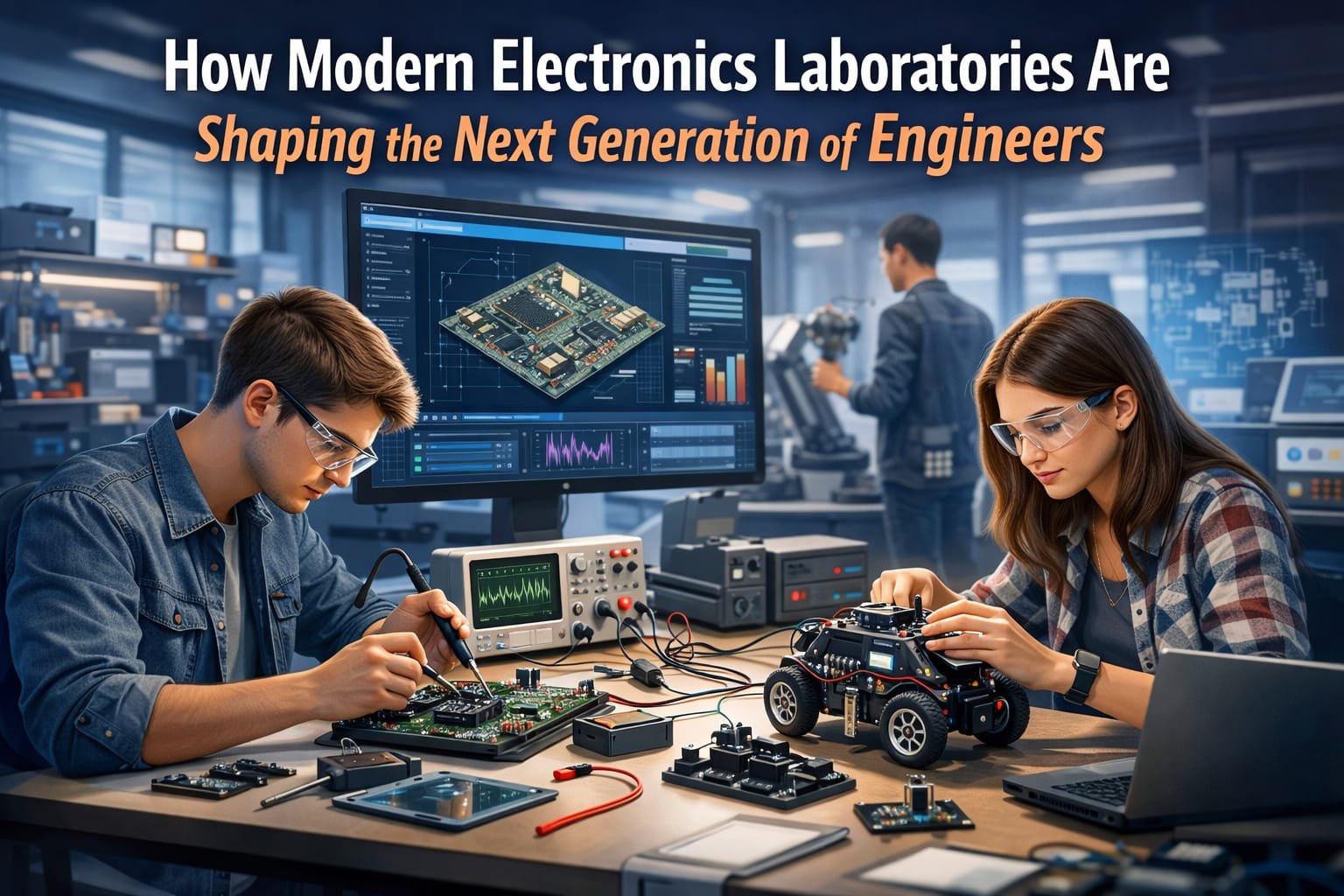
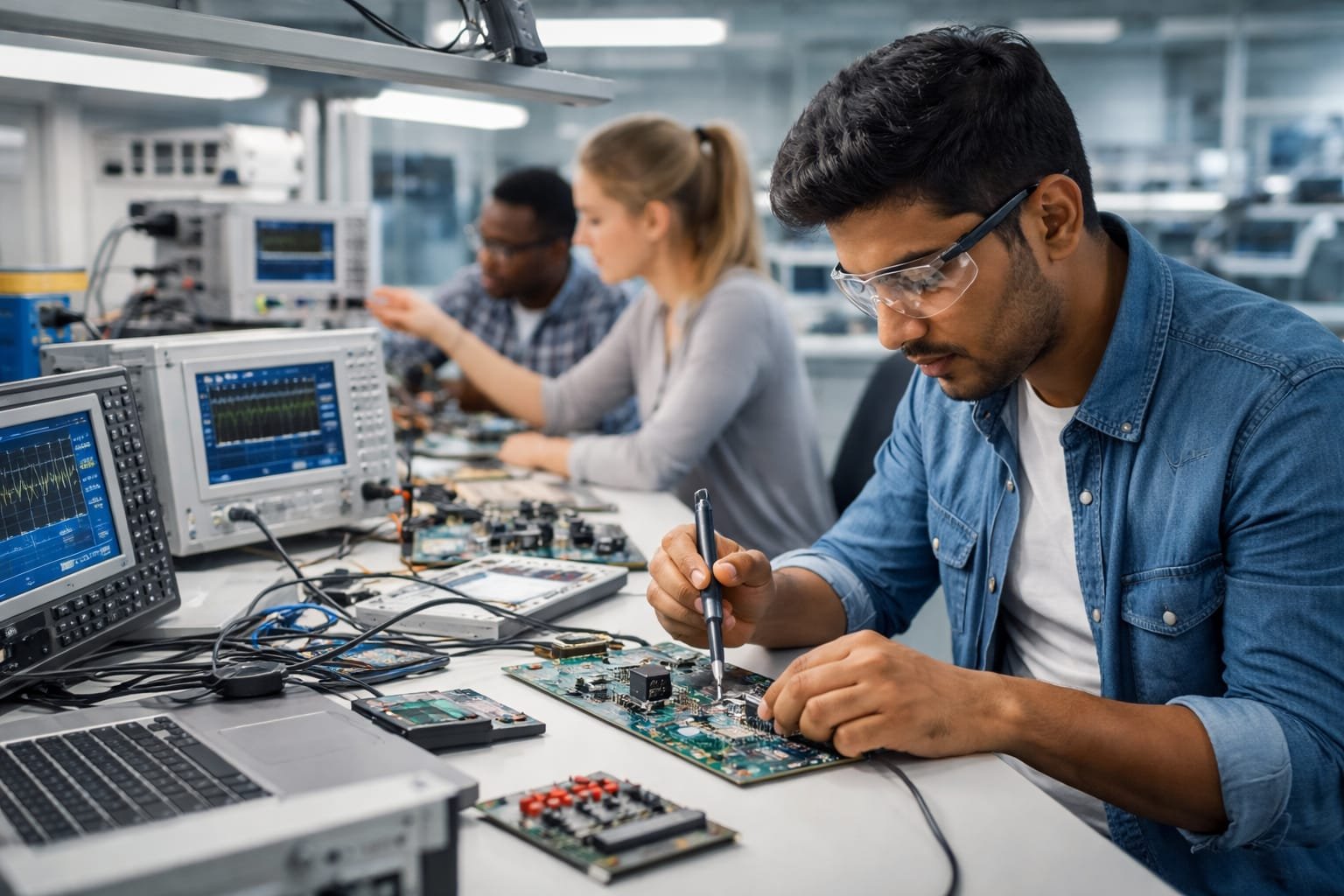
A modern electronics laboratory typically includes advanced measurement instruments such as oscilloscopes, signal generators, and digital multimeters. These tools allow students to observe electrical signals, analyze system behavior, and troubleshoot complex circuits. When students build circuits on breadboards or prototype boards and see signals appear on an oscilloscope screen, abstract theoretical concepts suddenly become tangible.
This hands-on experience is essential in developing true engineering competence. Engineering is not only about understanding formulas but also about solving real problems. Laboratory experiments encourage students to think critically, diagnose issues, and refine designs through repeated testing. These skills are fundamental for engineers who will later work in industries ranging from semiconductor manufacturing to telecommunications.
Another important aspect of electronics laboratories is the opportunity they provide for experimentation and creativity. Many breakthrough ideas begin as small projects in academic laboratories. Students who gain confidence in working with electronic systems often go on to develop innovative solutions in areas such as robotics, embedded systems, and the Internet of Things.
As technology advances, the structure of electronics laboratories is also changing. Many institutions are integrating microcontroller development platforms, IoT experimentation kits, and embedded system design tools into their laboratories. These technologies allow students to move beyond simple circuit testing and begin building intelligent electronic systems.
Additionally, digital simulation tools are increasingly complementing physical experiments. Software platforms enable students to design circuits virtually before implementing them on hardware. This combination of simulation and practical experimentation creates a powerful learning environment that enhances both understanding and efficiency.
Despite these technological advancements, the core purpose of the electronics laboratory remains the same: to transform theory into real engineering capability. Laboratories provide the environment where students develop confidence, curiosity, and the problem-solving mindset that defines successful engineers.
In the future, electronics laboratories will continue to evolve as technology progresses. Emerging fields such as artificial intelligence hardware, renewable energy electronics, and smart infrastructure systems will demand engineers with strong practical skills. Educational institutions that invest in modern laboratory environments will be better positioned to prepare students for these challenges.
Ultimately, the electronics laboratory is far more than a room filled with equipment. It is a place where ideas are tested, failures become lessons, and innovation begins. For many engineers, their first real encounter with technology does not happen in a corporate research center—but on a simple circuit board inside an electronics laboratory.
And from that moment, the journey of engineering truly begins.