
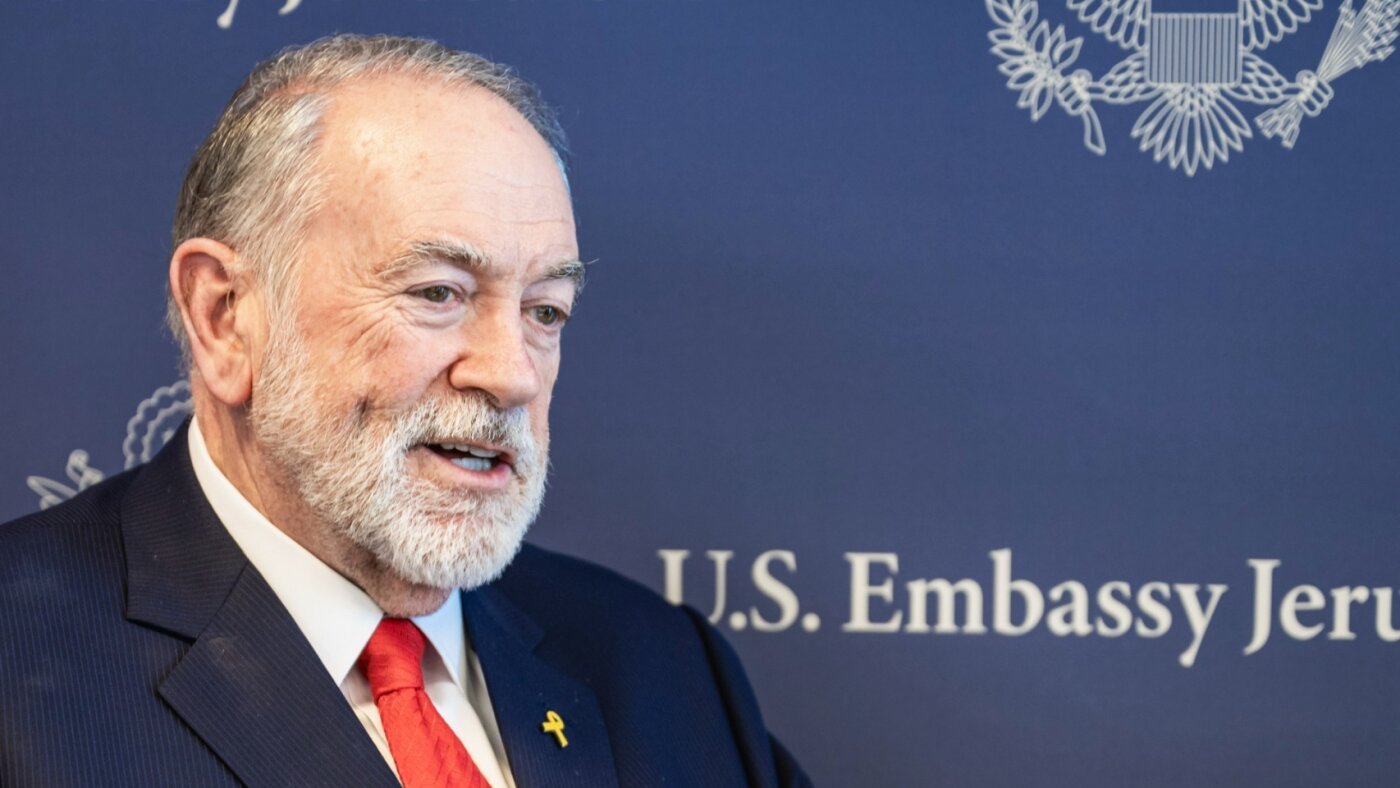

Tensions flared across the Middle East after U.S. Ambassador Mike Huckabee sparks controversy after asserting that Israel is entitled to large portions of the Middle East. His remarks, made during a televised interview, triggered swift condemnation from Arab and Muslim nations and reignited long-standing debates over sovereignty, borders, and international law.
The Interview That Ignited a Firestorm
The controversy began during an interview with conservative commentator Tucker Carlson. During the discussion, Carlson referenced biblical passages suggesting that the descendants of Abraham were promised land stretching across what is today much of the Middle East. He asked whether Israel could claim a right to that territory.
Huckabee responded candidly, saying it would be acceptable “if they took it all,” though he clarified that Israel is not currently seeking territorial expansion. He emphasized that Israel’s primary objective is ensuring its security within the land it “legitimately holds.”
Despite that clarification, the remarks quickly reverberated beyond the studio, drawing strong criticism throughout the region.
Strong Condemnation From Arab Nations
Governments and regional organizations responded almost immediately. Egypt and Jordan issued firm rebukes. The Organization of Islamic Cooperation and the League of Arab States also released statements condemning the comments.
Egypt’s Foreign Ministry described the ambassador’s remarks as a “blatant violation” of international law, asserting that Israel holds no sovereignty over occupied Palestinian territories or other Arab lands.
The League of Arab States went further, calling the statements “extremist” and warning that such rhetoric inflames religious and national tensions in an already volatile region.
As of the initial reactions, there was no immediate public response from either Israel or the United States government.
The Complex History of Israel’s Borders
To understand why the comments sparked such intense reactions, it’s essential to revisit the historical context. Since its founding in 1948, Israel has not had universally recognized borders. Its territorial lines have shifted repeatedly due to wars, armistice agreements, peace treaties, and unilateral withdrawals.
During the 1967 Six-Day War, Israel captured the West Bank and East Jerusalem from Jordan, Gaza and the Sinai Peninsula from Egypt, and the Golan Heights from Syria. Following the 1973 war, Israel returned the Sinai Peninsula to Egypt as part of a peace agreement. In 2005, Israel unilaterally withdrew from Gaza, though it has maintained varying degrees of control over access and security.
These historical changes remain central to ongoing disputes about land, sovereignty, and statehood.
Ongoing Tensions in the West Bank and Gaza
In recent months, Israel has intensified its presence in the occupied West Bank. Construction in Jewish settlements has expanded significantly, unauthorized outposts have been legalized, and administrative changes have deepened Israeli governance structures in the territory.
Meanwhile, Palestinians continue to advocate for an independent state in the West Bank and Gaza, with East Jerusalem as its capital — a vision supported by much of the international community.
Huckabee has long rejected the two-state solution framework. In previous interviews, he has questioned even the terminology used to describe Palestinians, reflecting a broader ideological stance that diverges from mainstream diplomatic language.
Biblical Interpretation Meets Modern Politics
During the interview, Carlson cited the biblical Book of Genesis, claiming that the land promised to Abraham would extend “from the Nile to the Euphrates,” encompassing areas that today include Israel, Jordan, Syria, Lebanon, and parts of Saudi Arabia and Iraq.
Huckabee responded cautiously to the geographic scope but acknowledged that such an interpretation would imply a vast expanse of territory.
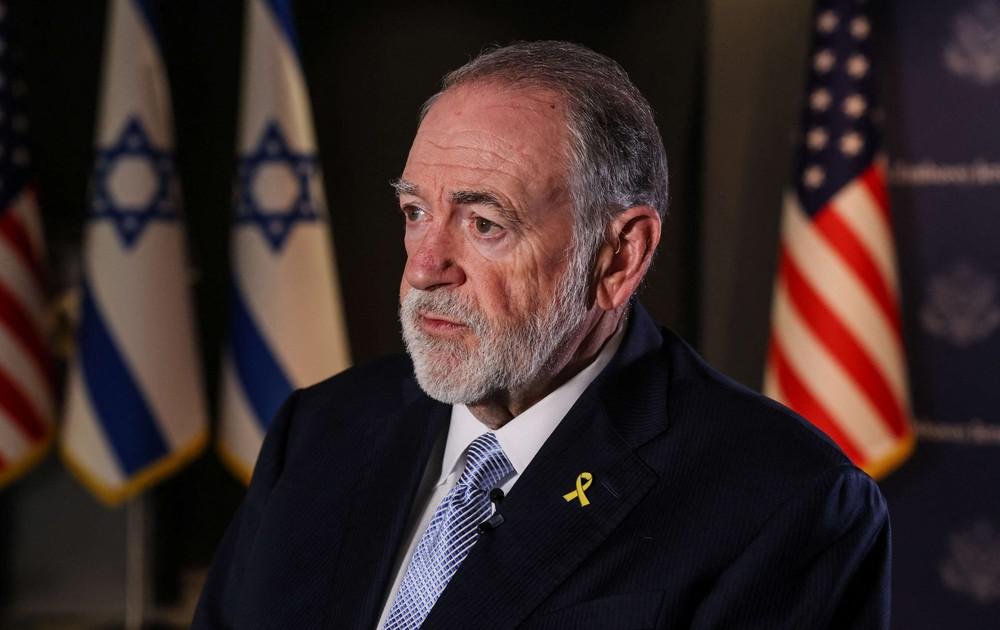
The exchange highlighted a sensitive issue: the intersection of religious texts and modern geopolitics. For many in the Middle East, territorial claims rooted in scripture — rather than international law or diplomatic agreements — are deeply controversial.
Regional Military Developments Add Fuel
The controversy comes at a time of heightened regional instability. Following Israel’s war with Hamas in Gaza, Israeli forces have maintained control over significant portions of the territory, even under ceasefire arrangements.
In addition, after the removal of Syrian President Bashar Assad in late 2024, Israel moved into a demilitarized buffer zone in Syria established under a 1974 ceasefire agreement. Israeli officials described the move as temporary and necessary for border security.
Israel also continues to hold several strategic hilltop positions in southern Lebanon following clashes with Hezbollah in 2024.
These developments have amplified regional concerns about territorial expansion — making Huckabee’s remarks even more sensitive in diplomatic circles.
A Statement With Global Implications
The backlash underscores how deeply contested land remains at the heart of Middle Eastern politics. U.S. Ambassador Mike Huckabee sparks controversy after asserting that Israel is entitled to large portions of the Middle East, not only because of what was said, but because of who said it — a senior diplomatic representative of the United States.
For Arab and Muslim leaders, such comments risk undermining long-standing diplomatic frameworks, including negotiations built around international law and United Nations resolutions.
At a time when ceasefires are fragile and regional tensions remain high, words from prominent officials can carry enormous weight. Whether Huckabee’s remarks will have lasting diplomatic consequences remains to be seen, but they have already reignited debates over territory, theology, and the future of peace in the Middle East.
Conclusion
The Middle East’s borders have been shaped by conflict, compromise, and fragile agreements. In that context, rhetoric suggesting sweeping territorial entitlement is bound to generate strong reactions.
As global powers navigate complex alliances and regional instability, statements like these serve as a reminder: in the Middle East, history and belief are never far removed from politics — and even a single interview can spark international controversy.
