
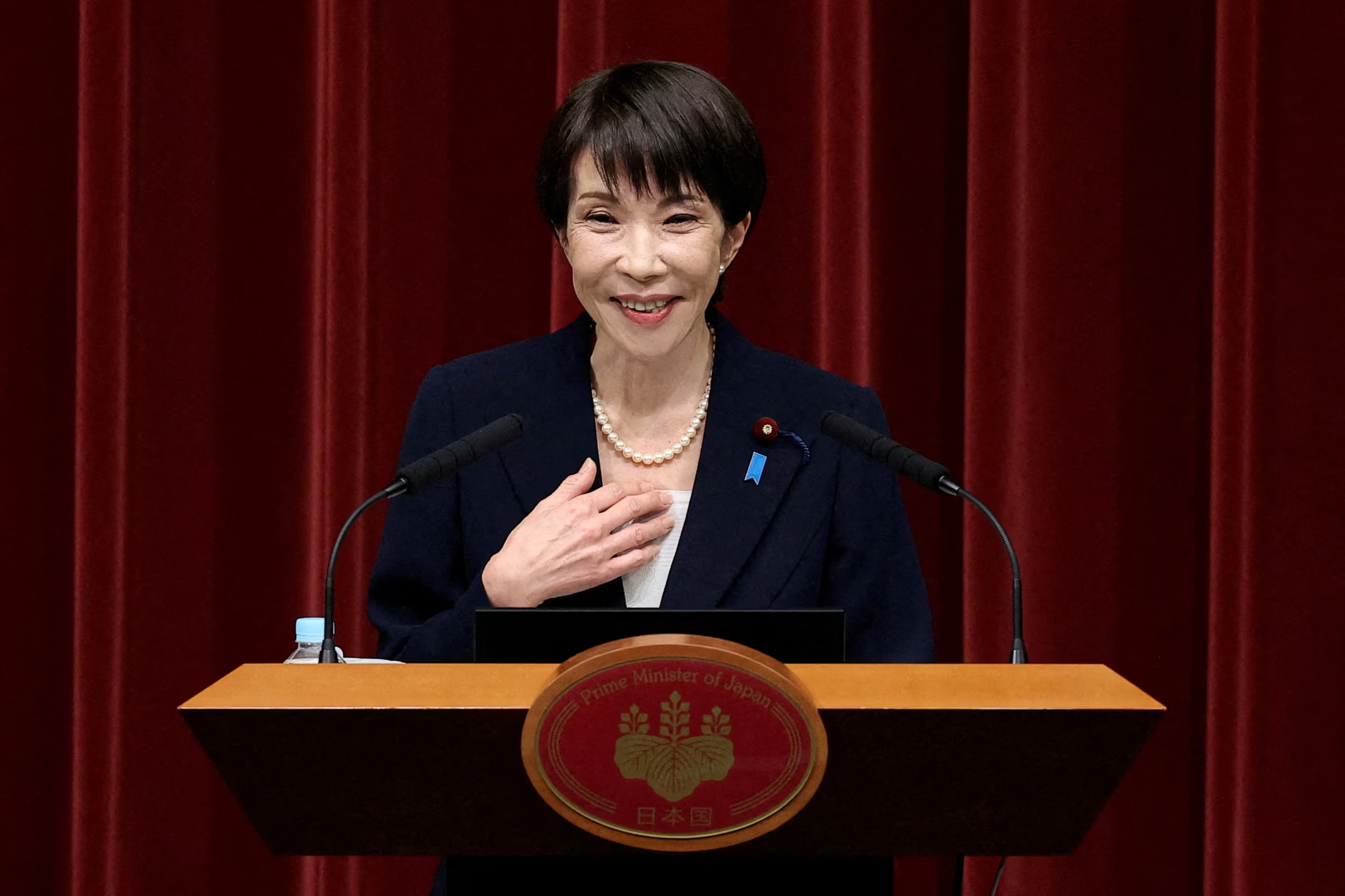

As Japan prepares for a pivotal Lower House election on Feb. 8, voters are grappling with familiar economic worries — rising living costs, sluggish wage growth and the drag of a weak yen. Yet beyond these bread-and-butter issues, the contest has taken on a deeper political meaning. The Japan election shapes up as a risky political bet for Takaichi amid mounting challenges to her popularity, with analysts saying the prime minister has effectively personalized the vote.
An Election Turned Into a Leadership Referendum
Political observers note that Prime Minister Sanae Takaichi has framed the election as a direct judgment on her leadership rather than a routine parliamentary race.
“She’s trying to make it a referendum on whether people accept her as prime minister,” said Kazuto Suzuki, director at the Institute of Geoeconomics.
Takaichi herself has reinforced that message. In mid-January, she openly told voters she was placing her political future on the line and asked whether they trusted her to manage the country. The approach reflects confidence built on her personal approval ratings, which until recently hovered above 70% — far higher than those of her own party.
Popular Leader, Weaker Party
Takaichi leads a relatively new coalition between the Liberal Democratic Party and the Japan Innovation Party, following the collapse of the LDP’s 26-year partnership with Komeito last October.
While the prime minister remains personally popular, support for the LDP itself lags below 30%, highlighting a clear disconnect between leader and party. Mireya Solís of the Brookings Institution says Takaichi is counting on that personal appeal — and a divided opposition — to secure victory.
Financial market expert Jesper Koll of Monex Group has argued that Takaichi’s personal story resonates strongly, especially with younger voters, potentially outweighing dissatisfaction with economic policy.
Caution From Political Analysts
Not everyone is convinced the election can be read as a straightforward endorsement of the prime minister. Kristi Govella, an associate professor at the University of Oxford, warns that Takaichi’s relatively short tenure makes it harder to interpret the results purely as a personal mandate.
Govella, who also serves as Japan Chair at the Center for Strategic and International Studies, noted that any strong LDP showing would largely stem from Takaichi’s popularity rather than policy shifts.
The party is still recovering from heavy losses suffered under former Prime Minister Shigeru Ishiba, whose snap election gamble in 2024 cost the LDP its Lower House majority and eventually his job.
Economic Pressures Shape the Mood
Economic anxiety continues to weigh heavily on voters. Inflation has exceeded the Bank of Japan’s target for nearly four years, while real wages have fallen consistently since 2022. A surge in rice prices last year and renewed yen weakness — briefly nearing 160 against the dollar — have further strained household budgets.
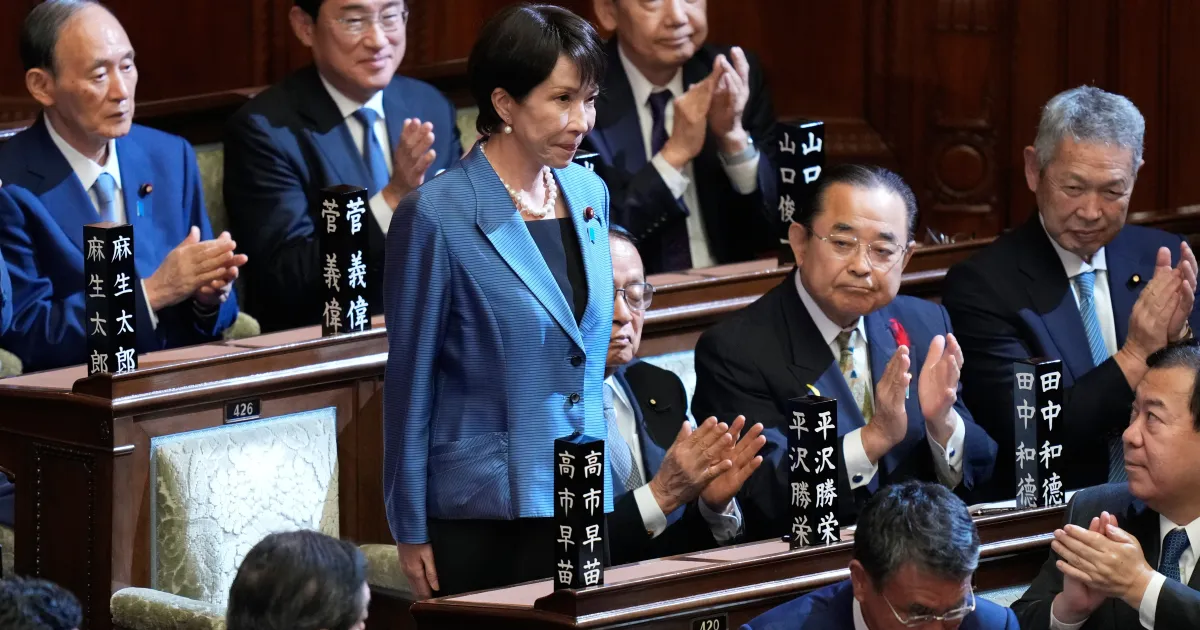
Despite these pressures, analysts say many voters are not directly blaming Takaichi. Ross Schaap of geopolitical risk firm GeoQuant suggests the public broadly accepts her expansionary fiscal stance, including a record $783 billion budget and a massive stimulus package aimed at cushioning living-cost shocks.
A More United Opposition Emerges
Still, Takaichi’s gamble is complicated by a more coordinated opposition. Former coalition partner Komeito has aligned with the Constitutional Democratic Party of Japan to form a new centrist bloc, strengthening voter mobilization and narrowing the ruling coalition’s path to a clear majority.
Before parliament was dissolved, the LDP-Innovation Party alliance controlled just 230 of 465 seats — a razor-thin edge. Analysts warn that without Komeito’s organizational muscle, the ruling camp faces a genuinely uncertain outcome.
As Schaap puts it, turnout may be decisive: high participation could favor Takaichi’s personal appeal, while lower turnout could tilt the balance toward a more energized opposition.
A Defining Moment for Takaichi
Ultimately, the Feb. 8 vote is shaping up as more than an economic referendum. It is a defining moment for a leader betting that her personal popularity can overcome party weaknesses, economic unease and a newly unified opposition — a bold wager that will determine not only the makeup of parliament, but also the durability of her leadership.
